

What to Do With Kids' Artwork: 9 Practical Ways to Save What Matters
Updated June 18, 2026
Intro
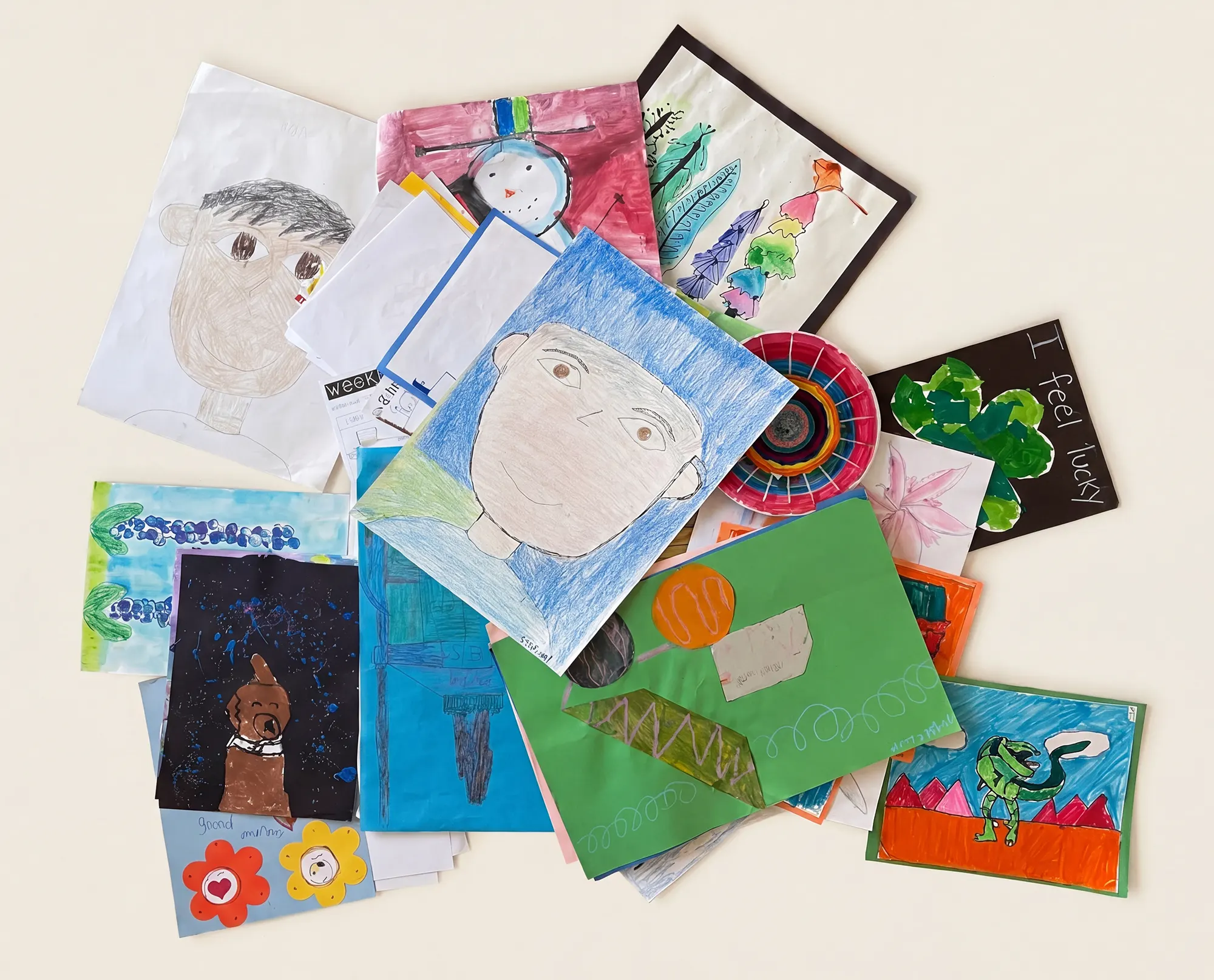
Your kid gets home from school and hands you something they made that day. You say it's amazing, whether it's a quick scribble on binder paper or a watercolor that's weirdly good for a six-year-old. Then it happens again tomorrow, and the day after, until you've got a pile that feels too good to toss and no real plan for.
This guide covers the most practical ways to deal with it, from free options you can start today to keepsakes worth keeping for decades.
Quick answer
For most families, the easiest way to deal with kids' artwork is to photograph everything first, save a small number of favorite originals, and turn the full year into one printed art book. A keepsake box works well for the few physical pieces you want to keep, and a rotating wall display is best for whatever your kid is proudest of right now.
Why it's hard to throw away kids' artwork
Unlike a photo, a kid's artwork shows how they're seeing the world that day, what they're imagining, what's in their head that they can't quite say out loud yet. The scribbled circle that was supposed to be a dog. The crayon family portrait with everyone's arms way too long. The watercolor that suddenly looks like someone with actual control of a brush made it. Each piece is a snapshot of a stage that's already over by the time you're holding it.
That's the real reason none of it feels safe to toss. It's not about the paper. It's about not wanting to lose the kid who made it.
The problem is real sentimentality and real volume. You can't keep all of it, and you shouldn't feel bad about that. A single school year can produce 50 to 100 pieces per kid, and almost nobody has a system for deciding what stays. The pile just keeps growing because there's no plan, not because anyone's being sentimental about the wrong things.
How to decide what to keep
Before sorting, photograph everything. A flat surface and decent light are enough. Once it's photographed, the decision to recycle the original becomes a lot easier because you still have it.
After photographing, keep a small number of originals, the ones attached to a real memory, not just a good drawing. The piece your kid worked on for a week. The one they handed you beaming, like it was a present. The one that actually surprised you. Not the worksheets. Not the coloring pages.
Then set a rule and stick to it going forward. Anything that does not get photographed within a week of coming home gets recycled, or whatever version of that works for your house. The specific rule matters less than having one.
Once you know what you're keeping, here's how the main ways to handle it stack up.
| Option | Best for | Downside | Approximate cost |
|---|---|---|---|
| Keepsake box $0-$30 | Saving originals | Gets full fast, and the paper fades over time | $0-$30 |
| Framing $20-$50 per piece | A few favorites | Not scalable | $20-$50 per piece |
| Front-opening art frame $20-$40 | Showing current work, no nails | Flat paper only, one piece visible at a time | $20-$40 |
| Digital photos (camera roll) Free | Quick, no effort | Gets buried, rarely revisited | Free |
| Digital photo frame $80-$200 | Keeping art visible without clutter | Just a display, not storage. Your photos still need to live somewhere else | $80-$200 |
| Kids art book From $49 | A full year of artwork shareable | You decide which originals to keep separately, since nothing physical ever leaves your house | From $49 |
| Mail-in art service $114-$500+ | Done-for-you printing shareable | You send originals away and pay for a box plus digitization. Limited to flat artwork that fits the box, no 3D or oversized pieces | $114-$500+ |
| DIY photo book From $30 | Full creative control shareable | Manual layout work | From $30 |
| Gifts (canvas, mugs, wrap, calendars) Varies | Turning favorites into gifts shareable | Doesn't solve the bulk of the pile | Varies |
The 9 best ways to preserve kids' artwork
No single system works for every pile. Some options are best for saving originals, some are better for display, and some are better for turning a whole year into something you can actually revisit. Here’s where each option works, and where it falls short.
1. Keepsake box for originals
This usually starts as one bin. Then it's three, stacked in the garage. Nothing stops a keepsake box from growing, so eventually it's just storage, not a collection. One more thing worth knowing: most paper kids draw on isn't archival, meaning it wasn't built to resist fading, so even the pieces you carefully saved will yellow and dull after a few years. If you're doing this, pick a fixed number of bins (one per kid works) and treat that as the limit. Full means something leaves before something new comes in.
2. Frame a few favorites
Pick one or two pieces a year that deserve wall space. A simple frame from a hardware store works. Mixtiles is a decent cheap option too, no nails, just stick it up. For more than a couple of pieces, a single grid frame holds several drawings at once instead of one frame per piece. Swap the display out yearly and store last year's piece flat. It keeps art visible without covering every surface, but you're still only framing your best handful, not the bulk of the pile.
3. Use a front-opening art frame
A front-opening kids' art frame, hinged on one side with a magnetic close, holds dozens of pieces inside and shows one on the front at a time. Swap it whenever you want, no nails, no new holes. Artfeel, Maplefield, and Opposite Wall all make these, usually $20 to $40. It's not quite a single framed piece and not quite a wire display, it's somewhere in between: art stays visible without fifty separate frames on the wall. Just know it only works for flat paper, nothing 3D or clay, and only one piece shows at a time. Everything else sits inside until you swap it out.
4. Save photos to your camera roll
The lowest-effort option is to photograph the artwork and move on.
That works fine as a quick record, especially when you're sorting through a big pile. The problem is camera roll photos rarely stay findable for long. They get buried behind screenshots, vacation photos, and the 200 nearly identical shots of your dog mid-yawn.
It's better than nothing, but it works best as a first step. If you want to actually revisit these, move them into a shared cloud album the other parent or grandparents can see too. Shared things get opened. Things sitting alone on one phone don't.
5. Use a digital photo frame
A frame like Skylight displays a rotating set of photos, including artwork, so it stays visible without taking up wall or floor space. It is a nice way to keep art in view day to day. Just know it is a display, not storage. The actual photos still need to live somewhere else.
6. Turn a full year of artwork into a kids art book
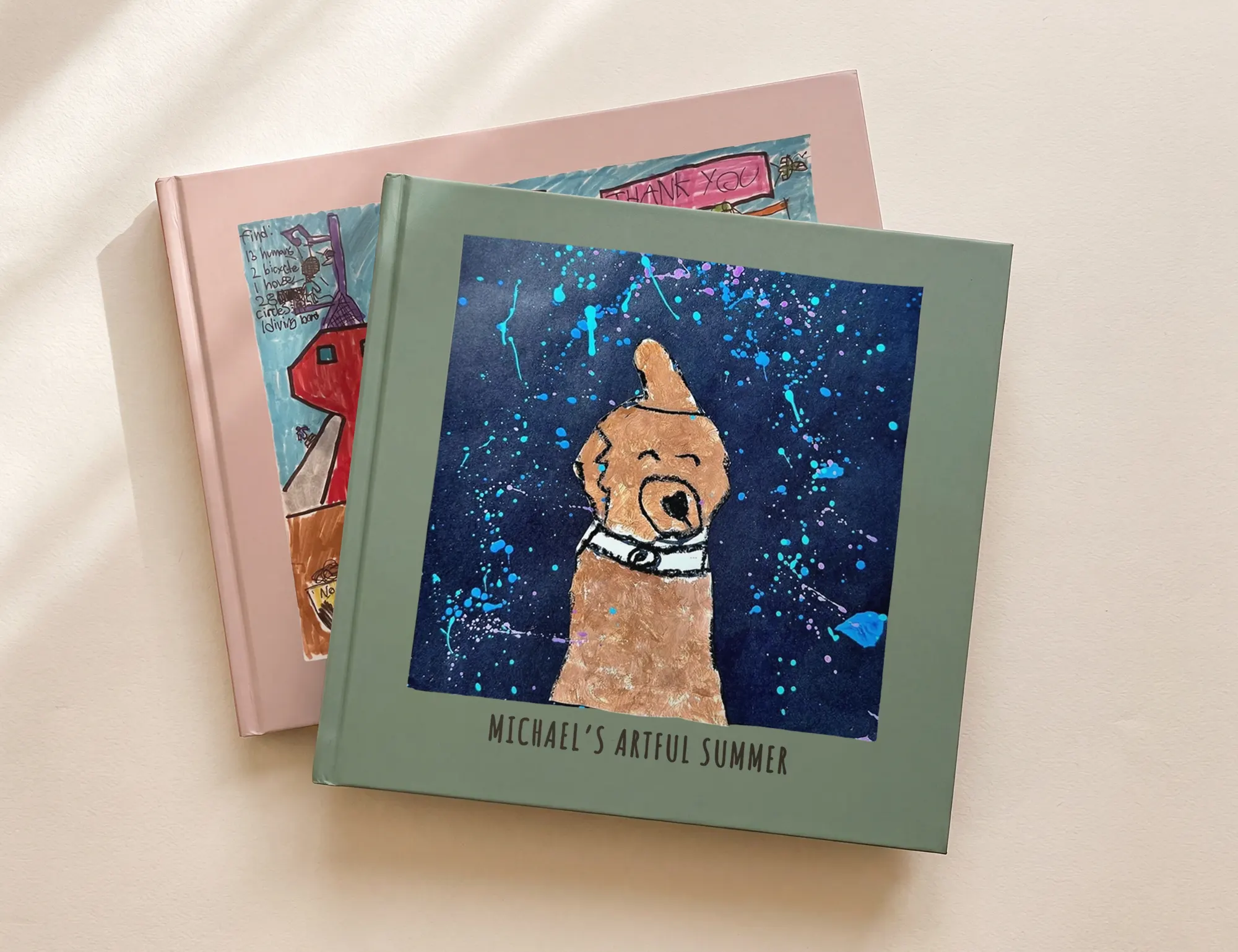
This is the best place to start if the artwork pile has gotten out of hand. It solves the biggest problem first: too many loose pieces, too many decisions, and nowhere left to stack them.
A printed art book works well for parents who want to keep a full school year without keeping every physical piece. Photograph the artwork, upload the photos, and the collection becomes one book your family can actually flip through.
Scribble Art handles the process. Upload phone photos, and the platform cleans up the artwork, removes backgrounds, organizes the pages, and turns everything into a premium hardcover book. No mailing in originals, no designing your own layouts. Books start at $49 and usually ship in 3-5 business days.
A year of loose artwork ends up in one book your kid can pull off the shelf, and one grandma will probably ask for her own copy of.
It is not meant to replace every original. Keep the few pieces that really matter to you. Use the book for everything else.
7. Send originals to a mail-in art service
Mail-in art services send you a box. You fill it with artwork, ship it back, and they photograph or scan each piece. From there, they design it into a book, framed print, or other keepsake.
This works if you want the most hands-off option and don't mind sending the originals away. The tradeoff is control, timing, and cost. You pack and ship the artwork, wait for processing, and work within whatever size and material limits the box allows. Flat artwork is usually easiest. Oversized pieces, fragile projects, and 3D crafts may not fit at all.
Check the full price and timeline before you commit. The box has to ship to you, your artwork has to ship back, and only then does processing start: photographing and editing each piece, building a proof, printing. That digitize-to-print stage alone typically runs 6-8 weeks, not counting the shipping on either end. The cost can climb fast too: Artkive currently lists a 200-piece book at $455, plus a $39 starter kit, putting the project at $494 before add-ons like getting the original artwork back.
Tip: If this is a holiday gift, start by mid-October. That timeline doesn't leave room to wait until December.
8. Build your own DIY photo book
A standard photo book platform works if you want full control over every page. You choose the layout, captions, backgrounds, sizes, and order, which is great if you actually enjoy the design process.
The tradeoff is time. Kids' artwork is not the same as vacation photos. Phone pictures usually need cropping, straightening, background removal, and brightness fixes before they're print-ready. Drop a casual photo straight into a blank template and the shadows, table edges, and crooked angles come with it.
This option is for people who want creative control and don't mind doing the cleanup themselves. If the real goal is turning a full school year into a book without spending nights fixing every page, an automated kids art book service will get you there faster.
9. Turn favorite artwork into gifts
Favorite pieces of kids' artwork make great gifts, especially for grandparents and family members who want something personal. One standout piece can become a canvas, mug, or wrapping paper. A handful of favorites can become a calendar.
This uses the artwork instead of just storing it, without adding to your own pile. It works best for the few pieces that actually stand out, not the entire school-year collection.
How to photograph kids' artwork at home
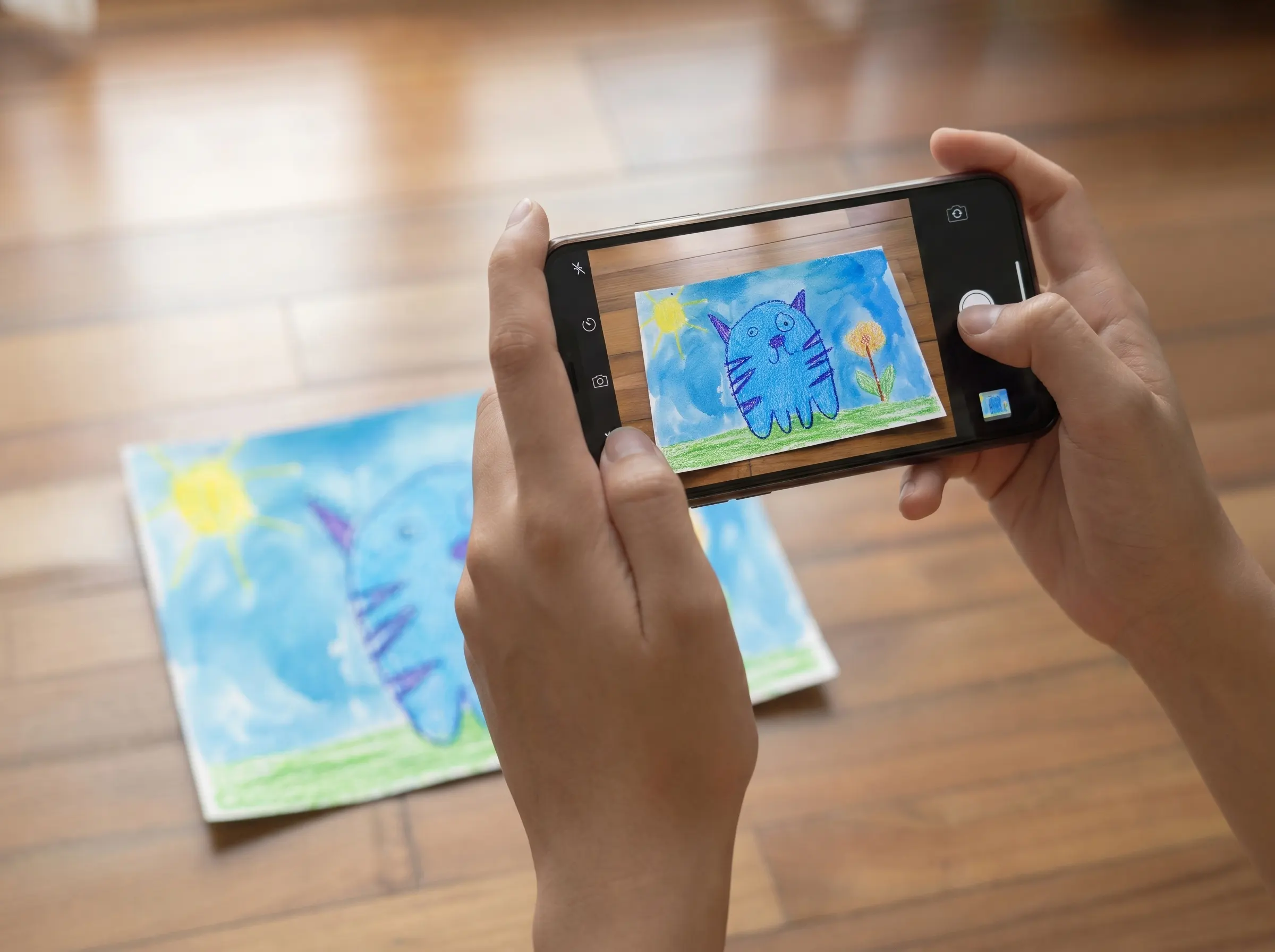
You do not need a scanner. A phone camera in good natural light is enough.
- Lay one piece of artwork flat on a plain, contrasting surface
- Use natural indirect light near a window or door
- Turn off your flash
- Avoid wide-angle or fisheye camera modes
- Shoot from above and leave a little space around the artwork
- Avoid busy backgrounds like tile grout lines or knotty wood
- For curled paper, flatten it first instead of weighing down the corners inside the photo
For white paper, use a darker surface. For dark artwork, use a lighter surface. The contrast helps separate the artwork from the background.
For folded or curling pieces, a light adhesive craft mat can help hold the artwork flat while keeping the photo clean. Just leave space around the edges so the mat does not get mistaken for part of the artwork.
If you are photographing a large number of pieces, do it all in one session. Set up your space once, take one photo per piece, and move through the pile. The photos do not need to be perfect, but a cleaner setup gives you better results later.
FAQs
Do I have to keep every piece of kids' artwork?
No. Photograph everything first, then keep only the pieces that have a story or feel genuinely special. Most parents find that once a piece is photographed, it is much easier to let the original go.
How do I store kids' artwork long-term?
For flat artwork, use a labeled portfolio folder, art box, or archival storage box organized by year, age, or grade. For bulky projects, photograph them first, then keep only the physical pieces that really matter. Most families need a limit, like one box per child or one small container per school year, otherwise “keepsakes” slowly become storage.
Is saving photos on my phone enough?
It is a good first step, but it is usually not a complete system. Camera roll photos get buried behind screenshots, receipts, vacation photos, and everything else your phone collects. If you want a digital-only approach to work, move the photos into a dedicated album or folder. If you want the artwork to be easier to revisit, turn the collection into a printed book once a year.
How do I photograph kids' artwork without a scanner?
Use a phone camera in natural light, ideally near a window with the overhead lights off so you do not cast shadows across the artwork. Lay one piece flat on a plain, contrasting surface, shoot from above, and leave a little space around the edges. For more detail, see our guide to photographing children’s artwork with your phone.
What should I do with oversized or 3D kids' artwork?
Photograph oversized or 3D projects before they get bent, broken, or slowly absorbed into the house. If the shape or texture matters, take a few angles. Then keep only the physical pieces that really matter.
What is the best way to preserve a full school year of artwork?
The best way to preserve a full school year of artwork is to photograph the pieces, save a small number of meaningful originals, and turn the full collection into something organized, like a printed kids art book, labeled portfolio, or yearly archive. A printed book works especially well because it keeps everything together in one place and is easy for kids and family to look through.
Can I make a photo book from kids’ artwork?
Yes. You can make a photo book from kids’ artwork by photographing each piece, uploading the images, and turning them into a printed book. Some services let you upload phone photos from home, while others require mailing in the original artwork for scanning or photography.
If you want to keep the originals at home, choose a service that works from phone photos and handles image cleanup before printing, like Scribble Art.
Start Your Kids Art Book Today
Make Their Art Something You'll Treasure Forever
- The easiest way to make a kids' art book! Just snap, upload, and let us do the rest.
- Every book is designed to make kids' artwork look beautiful and vibrant in print.
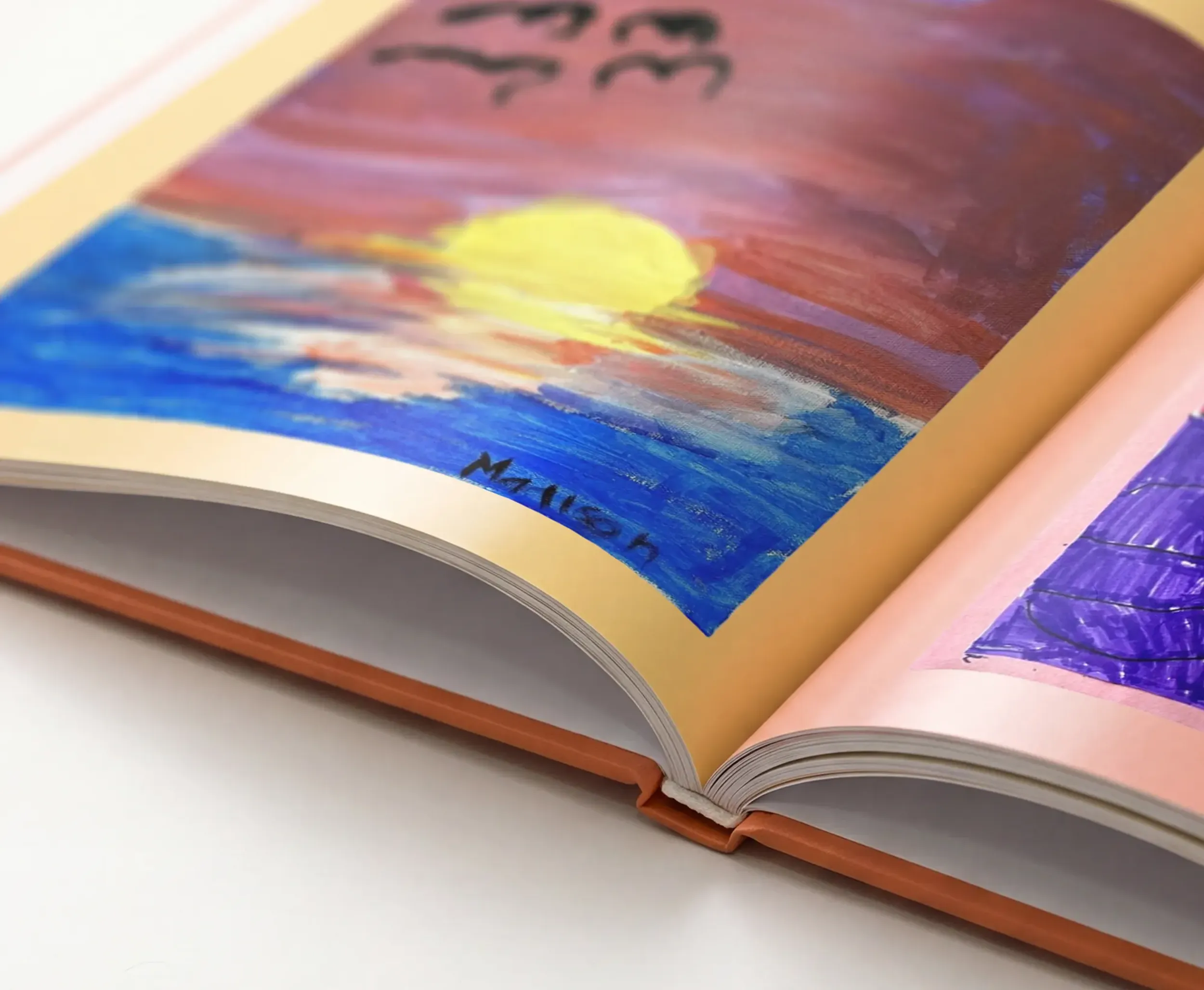
- Premium hardcover binding and archival paper, printed in the USA.
- Loved by parents and grandparents alike - an amazing holiday gift.
- Free shipping on orders over $70
- 100% satisfaction guarantee