My Son Is Graduating 5th Grade. I'm Not Sure I'm Ready.
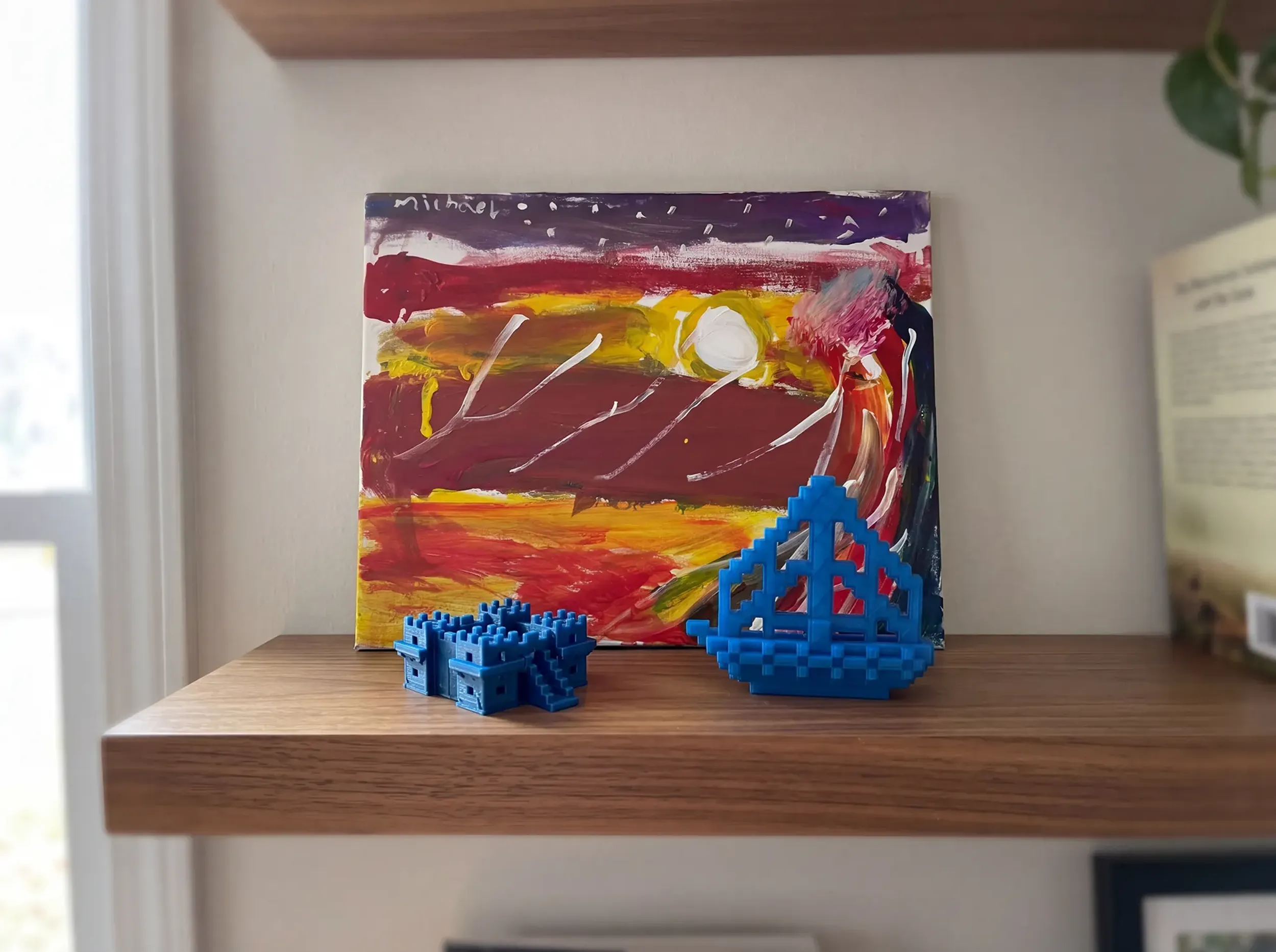
My son Michael is 11 and finishing 5th grade in less than a month, with middle school right around the corner. I walked past a shelf and noticed a canvas painting he made back in kindergarten, and sitting right in front of it was a small collection of Roblox-style castles he'd been 3D printing lately. The gap between those two things, in craft, in thinking, in what he was even trying to make, was a clearer picture of how fast he's grown than I was ready for.
He was 5 when he painted it. Bold, abstract, mostly reds and yellows, his name written in the corner in that way kids write their names when they're still figuring out letters. The castles he designed himself in Tinkercad and printed on our 3D printer. About three inches wide each.
Same kid. Six years of a lot of change.
The screens started showing up in 3rd grade. Kids in his class getting phones. Homework moving online. The school pushing more of the curriculum onto devices, so it wasn't purely peer pressure, it was structural. The path of least resistance ran straight through a screen.
We weren't great models either. It's hard to tell your kid to put it down when you're sitting next to him on yours. We still fight this. We don't win every day.
What we kept coming back to was protecting unstructured time. Not filling every hour. Letting them be bored and seeing what came out of it. We wrote more about this here, but the short version: the good stuff happens in the gap between "I don't know what to do" and the next thing they invent.
A few months ago on a Saturday with nothing on the calendar, Michael and his sister decided to build a marble run out of cardboard. Three feet tall, hot glue everywhere, built from a pile of cardboard they'd been accumulating for months. He used his ChompSaw, a tool from ChompShop, a parent-founded small business we're big fans of. It covered the entire coffee table. He didn't want to take it down for a week.
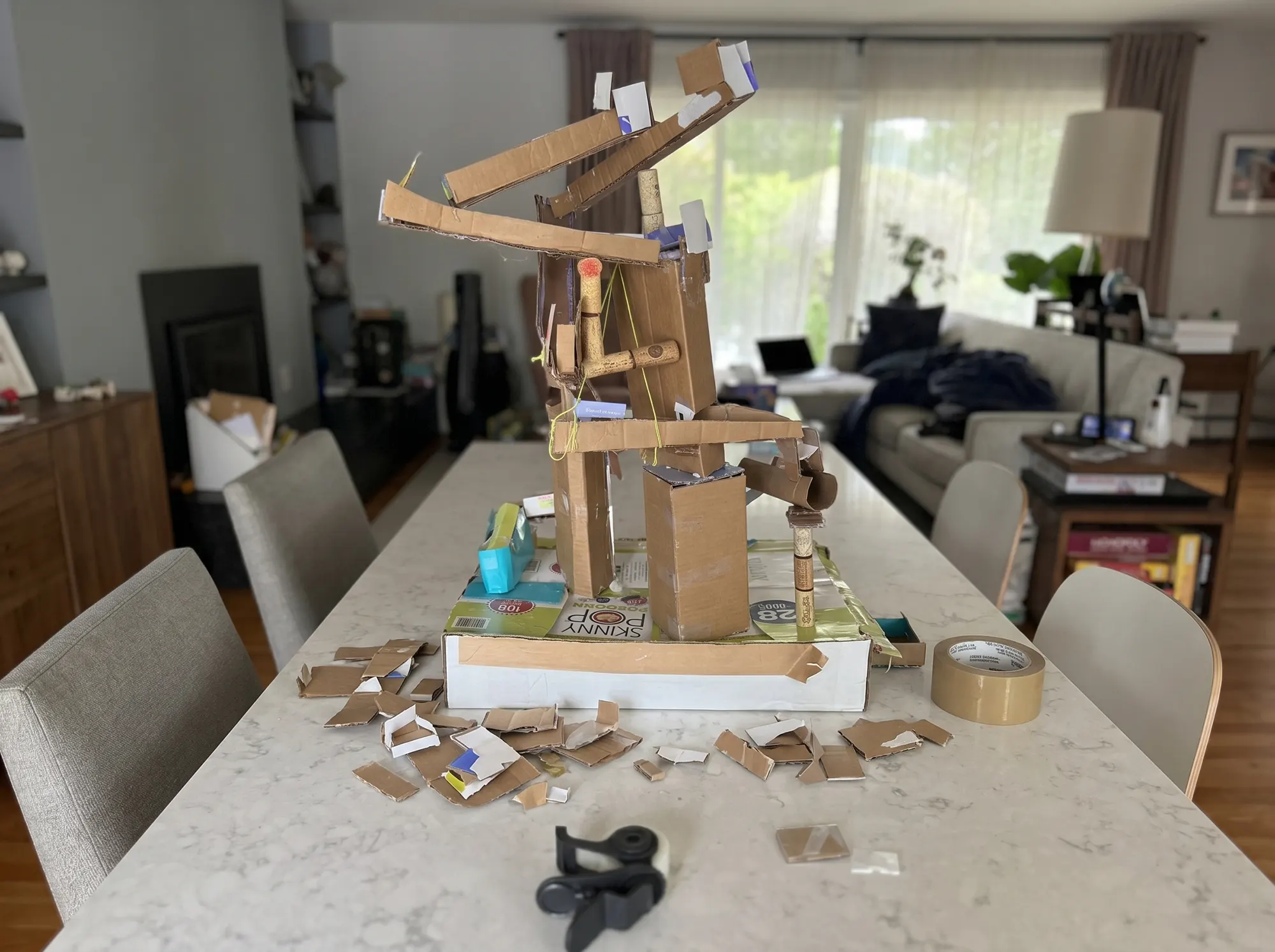
When they got stuck we might have asked a question or two to open up a direction, but they figured it out themselves. That's the part that doesn't show up in the photo but matters most.
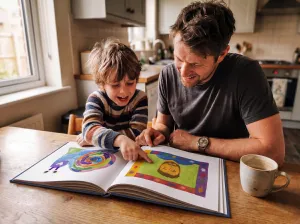
We photographed it. That photo is in his Scribble Art book.
I want to be specific about what comes out of an afternoon like that. He and his sister designed something from scratch with no instructions. When the marble kept missing the next section they adjusted the angle, tried again, figured it out. They negotiated the whole build together. At the end they had something physical they built themselves, and they were proud of it.
Those aren't enrichment skills. They're the ones that matter at 25. He's practicing them at 11, on a Saturday, because we left the afternoon open.
We've made a Scribble Art book for each school year. End of year, when the backpack comes home for the last time, that's the trigger. It's become the thing we do instead of letting the pile grow into a problem. One book per grade. You can actually see the progression that way, not just across six years but year to year.
Michael's kindergarten book looks nothing like his 5th grade book. The canvas is in the kindergarten one. The marble run photo and the Tinkercad prints are in this one. So is a clay phase, a tape-and-cardboard phase, a few things from school I would have lost otherwise, photos of him at that age, a soccer tournament he was proud of, and some of the random stuff that doesn't have a category but felt worth keeping at the time.
You can see the arc. The way he approached making something at 5 is different from how he does it now, and the work shows it. The painting and the 3D castle look nothing alike. Both are Michael. The distance between them is what's worth keeping.
A kids art book isn't a scrapbook. It's a record of how they thought and made things at a specific age. Flip through it in ten years and you won't just see what he made. You'll see how they saw the world.
Middle school starts in September. The schedule will fill up. The social pressure around screens will get harder to push back on, and he'll have more opinions about how he spends his time. The unstructured Saturday afternoons will get rarer.
I don't know how much of the analog, building-things-with-his-hands version of him survives the transition. I hope most of it does. But I have the record of it either way.
If your kid is finishing elementary school and you've got a pile of artwork, a photo of something they built that you can't keep, or a year's worth of creativity coming home in a backpack, this is the moment to do something with it.
👉 Head to scribble.art. Make their art yearbook before this chapter closes.
About Scribble
At Scribble Art, we believe that when kids have the space to imagine, create, and explore their own ideas, it leads to incredible personal growth, academic success, and happiness. We're thrilled to be a part of your child's creative journey. Click below to discover how Scribble Art can play a vital role in fostering your child's creative spirit.